The future of arts education in Trondheim
Interviews, Intervju, Eso Malflor 29.06.2026
Over the past decade, Kunstakademiet i Trondheim (KiT) has undergone a series of dizzying institutional shifts. From its absorption into NTNU to severe cuts in government education budgets, the loss of physical facilities, and the recent reintroduction of tuition fees for non-EU students, the academy is under immense pressure. As one of only four art academies in Norway, its regional importance is undeniable, and the weight of preserving it hangs heavily on the administration. Yet the challenges facing KiT are a microcosm of a much larger, global anxiety: a systemic tension within higher education in the wake of increasingly new technology and widespread AI development.
This tension reveals itself in the academy’s new job listings. As two new professorship positions are opening up at KiT — one on «Speculative Materials» and another that is planned to focus on «Performative Intelligence» — urgent questions arise about where the institution is placing its emphasis. Within the art world, we constantly risk alienating the public with dense jargon and highly academicized language. But what happens when this precise brand of language is the very thing keeping an institution alive?
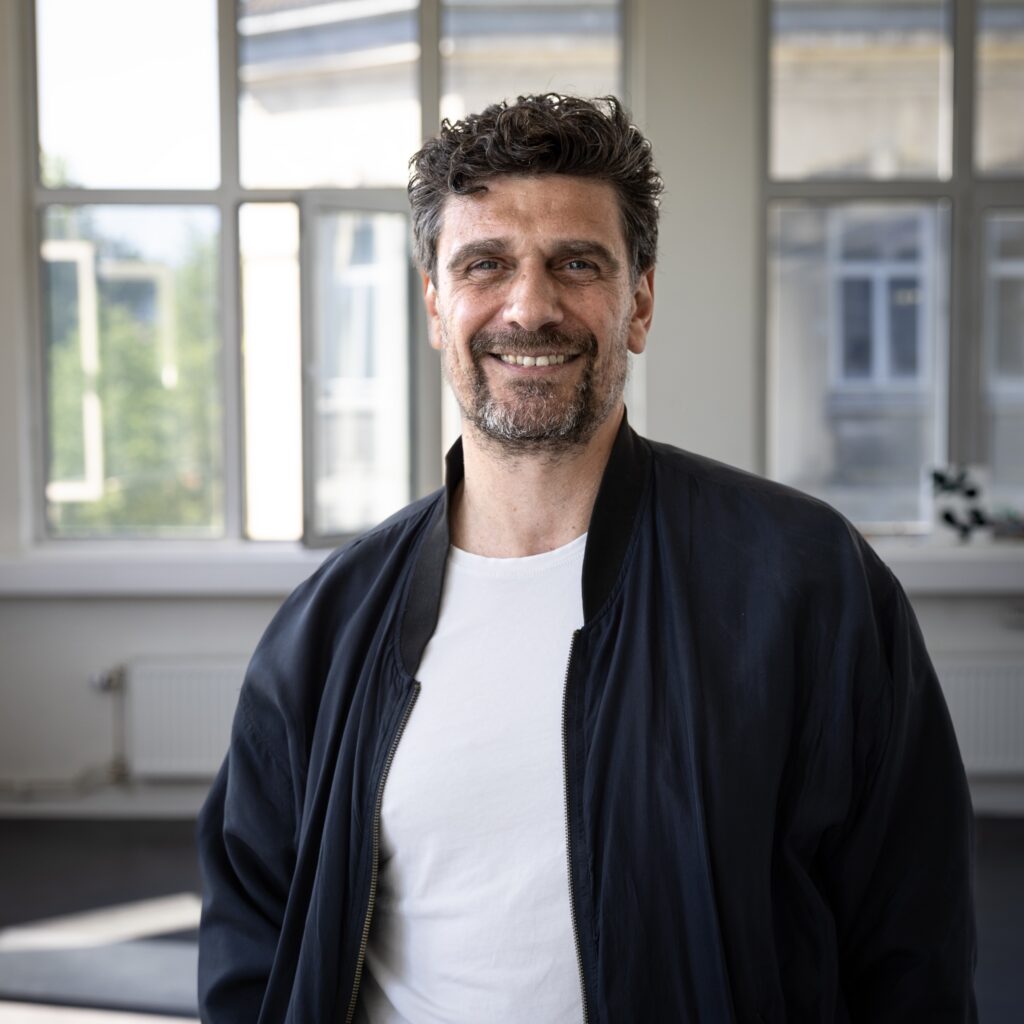
KiT’s Head of Department, Jacob Jessen, explains that this abstraction is a deliberate, strategic framework designed to allow applicants to position their own diverse practices within the roles. «I totally understand… those announcements looked at from the outside can seem maybe even arrogant, right?» Jessen admits. «But that’s definitely not the ambition. And the important thing is how they’re filled.»
To house an art academy within a massive, research-driven entity like NTNU necessitates structural adaptation. When the vast majority of university funding is geared toward quantifiable academic research, the administration must frame the arts in a language the broader university understands simply to secure survival resources. However, the friction generated by this top-down framing is deeply felt on the ground floor. As photographer and recent BFA student Håkon Sandmo Karlsen observes: “It is reflecting NTNU’s practice, but it’s not reflecting the art scene’s practice.»
Historically, entering an art academy comes with a clear expectation: students will learn the foundational skills that open both their eyes and their hands to physical media. In the classical European tradition, this meant painting from life, sculpting in clay, woodworking, and textiles. Today, contemporary art has expanded to embrace photography, video, performance, and multimedia installations. Artists can now 3D-print clay vessels, projection-map interactive environments, or code motion-activated sculptures. Many creators leverage this technology to push past the boundaries of traditional craft.
Yet, upon entering an art school — particularly at the BFA level — most students do not possess the baseline technical knowledge to jump straight into advanced conceptual making. They go to an academy like KiT specifically to acquire those tools.
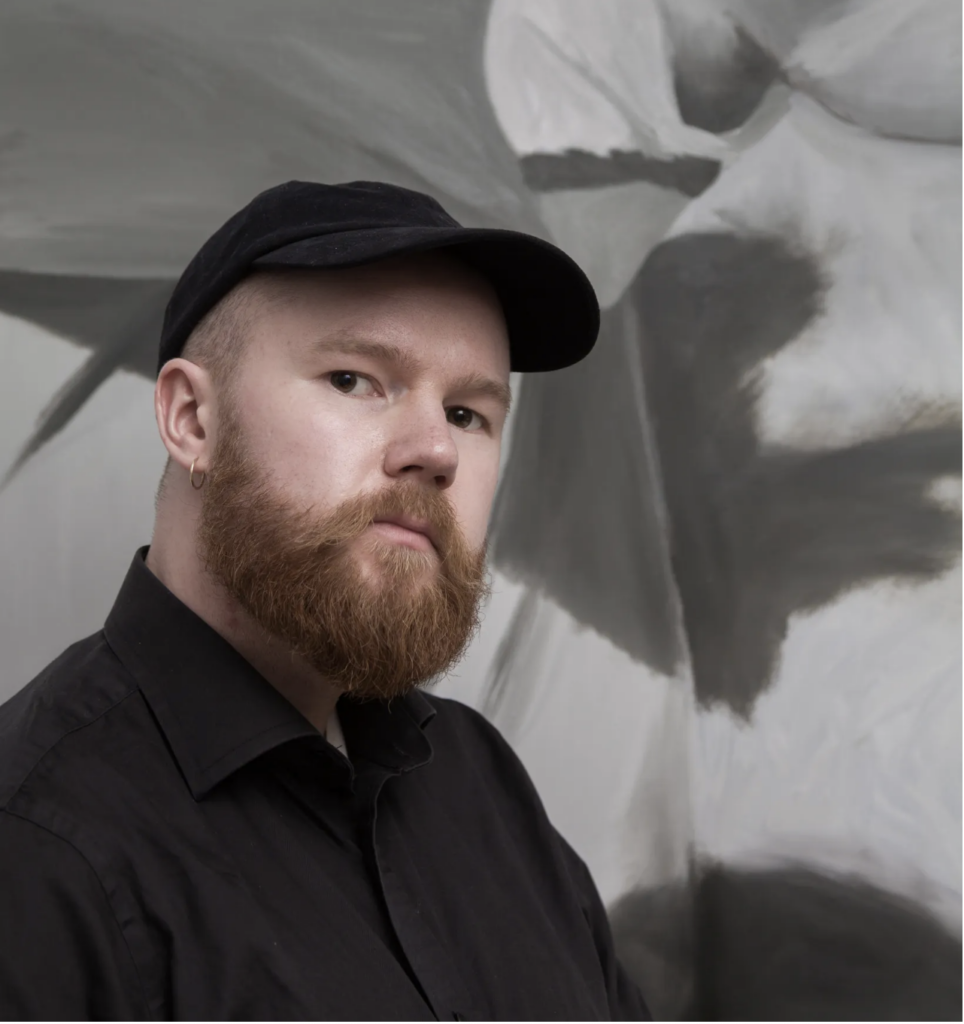
Karlsen recalls entering the BFA program with the promise of dedicated studio space and access to vital working facilities: a metal shop, a wood shop, printing equipment, and a darkroom. Instead, he found a curriculum heavily weighted toward theory at the expense of manual competency. «Silk printing: short, tiny course. Philosophy: huge course,» Karlsen says. «Which skills are you actually using as an artist? You’re using the physical silk print graphics, painting, everything — but at KiT you are mostly learning to talk about things.»
This curricular drift from the physical to the discursive strikes at the core of artistic identity. As Trondheim-based artist and deputy chair of the Norwegian artist’s union NBK Edvine Larssen notes, the physical workspace is a non-negotiable catalyst: “If you give artists studios, you get a lot back.” Looking at the skills of recent students, Larssen observes a widening gap: “It’s very obvious that the students have little material knowledge.” For many working artists, a well-rounded arts education must be embedded in hands-on practices that connect the maker to history. It is essential for young artists to understand “whose shoulders are you standing on” as Larssen puts it, and to be able to place themselves within artistic lineages.

While incoming students remain hungry for this material literacy, the institution is increasingly lacking the capacity to deliver it. The foundation of its technical education has become so strained that students have felt forced to self-fund their own learning. «We tried for many years to do nude painting, nude drawing, but the administration doesn’t want to hire people to do it, so the students themselves have to hire someone and pay for it… which is batshit crazy,» says Karlsen.
Furthermore, the lack of dedicated technical staff has led to the systemic choke-holding of KiT’s remaining facilities. The academy’s metal shop has been completely shut down, and other workshops operate on restrictive hours. «We had a huge darkroom that closed down at 3:00 in the afternoon,» Karlsen notes. «Most artists work after 2:00. Living in Norway is expensive; you have to work even though you’re a full-time student.» Given these restrictions, it is difficult to imagine how a student can balance a part-time job while trying to squeeze their practice into such a narrow window of access. Jessen counters that the institution cannot and should not dictate when artists work, but that they must establish sustainable frameworks that protect their technical staff under the Working Environment Act. Within those institutional boundaries, the administration makes informed choices for the programs and workshop access.
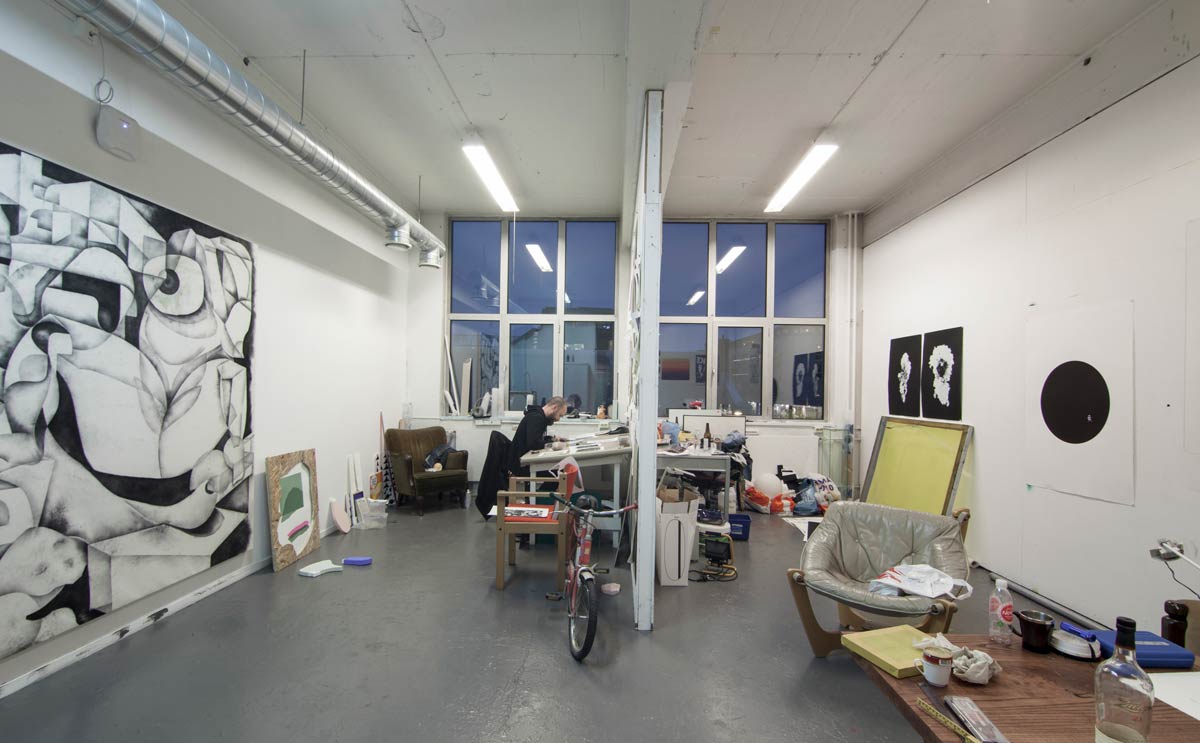
From the administration’s side, Jessen expresses genuine empathy for the students’ frustration caused by these budget cuts and space reallocations, particularly regarding the physical reconfiguration of individual workspaces. «Moving the master students down to a more sort of open, not open, but sort of connected studio area — moving them from office studios with doors — they really hate me for this and I have to say I understand that,» Jessen reflects. From the administration’s perspective, this physical restructuring is a deliberate pivot toward a collective learning environment that is designed to foster a research-based ecosystem.
Beyond teaching foundational skills, an art academy’s mandate is to prepare students to navigate the professional art scene after graduation. While some graduates leave the city, many stay, becoming vital actors in a growing ecosystem of galleries and museums. As the sole art academy in Trøndelag, KiT carries an unspoken responsibility to act as a bridge to this local scene. Yet, while the academy prioritizes university metrics like innovation and entrepreneurship, students actively working in the community find themselves falling through the institutional cracks.
Karlsen — who is now a teacher at Norsk Fotofagskole, a board member at K.U.K., and an active practicing artist — recalls how his own integration into the professional art world was treated by the school not as a success, but as a bureaucratic infraction. He explains that when he asked for flexibility to manage a local festival and an exhibition of his work at K.U.K., the response was a rigid refusal. «I had a meeting some months before just saying that I’m gone this and that day, can I do some extra work to pass this course?» Karlsen recalls. «I immediately got ‘no’ as an answer. To me, that KiT is not supporting the students when they are actually working in the art scene is a really bad thing.»
It is easy to point fingers, but a productive analysis requires looking at these structural complications from all sides. Enacting change from within any institution is an exhausting task; the current crisis is a tragedy of systems rather than a personal failure of faculty and staff. When funding is systematically slashed, an administration must adapt to survive. But how an institution chooses to adapt matters deeply.

The loss of KiT’s workshops was severely exacerbated by the sudden cancellation of KiT’s inclusion in NTNU’s Campussamling project. The university had originally promised shared workshop infrastructure across the art, architecture, and design departments — a structural promise that evaporated when the project was axed. In Jessen’s words, the loss of that shared infrastructure «virtually sort of torpedoed our situation.»
Yet, outside the university walls, the broader cultural ecosystem is watching this material retreat with growing alarm. Ingrid Lunnan, Director of the Nordenfjeldske kunstindustrimuseum and Trondheim kunstmuseum, and curator Marianne Zamecznik from Trondheim kunstmuseum stand firmly on the principle that providing functional studio spaces, workshops, and hands-on education is the fundamental, uncompromised duty of the academy. In their view, facilities are not a luxury or an optional bonus; they are the very definition of an arts education.
«There is a lacuna in the educational system here in Trondheim in terms of artists wanting to work more craft-based,» Lunnan observes, noting that unlike Oslo or Bergen, Trondheim lacks a dedicated craft academy. «A lot of young art students are very interested in textiles, they’re very interested in traditional printing techniques and a lot of those more hands-on approaches.»
Zamecznik goes a step further, directly questioning whether the academy’s new, highly theoretical professorship lines are being used as an intellectual smokescreen to hide a budget-driven disinvestment in physical making. «I feel that they’re inventing these new positions in order to be able to defend that they don’t want to have expensive workshops and positions,» Zamecznik critiques, «because it takes time to build them up and maintain them. You need the workshops.» For Zamecznik, the stakes are existential, requiring the cultural sector to hold its ground rather than blindly succumbing to corporate tech trends. «If somebody is going to advocate for the value of visual arts in society, it’s us,» she argues. «Nobody else is gonna do that. Because the rest of the world is pushing for AI development anyway.»
While a sharp dichotomy is often drawn between emergent technologies like AI and traditional craft, there is absolutely room for both — especially at an institution like KiT. As Lunnan points out, the two realms are fundamentally linked: «There is a very foundational connection between your hands and the whole digital world. I mean there is — the name is from a finger, you know, like a digit… If we set this up as an either-or, we stand to lose something.»
From the outside looking in, however, the academy’s current trajectory might suggest otherwise. Looking closely at the newest positions being advertised, it is easy to assume the school is shifting drastically toward NTNU’s tech-heavy specialty fields at the expense of material practices. This skepticism is exacerbated by a historic lack of clarity and open communication with the broader public. For years, a common critique within the local community is that KiT operates inside its own insular bubble, largely disconnected from the very arts ecosystem it is meant to feed. As Larssen bluntly summarizes: “There’s no obvious connection at KiT to where we are, in Trondheim and southern Sápmi.” Without active, transparent dialogue, it is only natural that the local art scene looks at these structural changes with deep concern.
This concern becomes even more pressing when looking at the numbers. Out of KiT’s small staff of thirty employees, fourteen are PhD and Postdoc researchers. The core educating faculty consists of just nine individuals, not all of whom are active, working artists. This imbalance begs a fundamental question about the institution’s core vision: is KiT’s primary mission to nurture artistic practice and creative output through education, or is it to produce academic research?
There is, however, a massive opportunity hidden within this identity crisis. Because KiT is uniquely situated inside a powerhouse research university like NTNU, it has the potential to drastically lean into this shift — but it must do so with absolute, crystal clarity. If the administration stood up and explicitly declared that their vision is to become the leading art academy in Europe for artists working at the intersection of science and technology, the skepticism would evaporate.
A transparent pivot like that would be to the academy’s immense advantage. The contemporary art world is full of creators who desperately want to learn how to code, build complex machines, experiment with biomaterials, and manipulate AI. If KiT openly branded itself as the vanguard of tech-driven art, incoming students would know exactly what they were signing up for, and the local art scene would be able to adjust its expectations. Yet, even if the academy were to boldly claim this, it is clear that the local community insists that a glossy tech branding cannot be used as a get-out-of-jail-free card for material abandonment. As the local scene is quick to counter: you still have to teach the physical material foundations. You cannot meaningfully program a motion-activated kinetic sculpture if you do not understand the weight, tension, and physics of the wood or metal it is built from. Tech-driven art is still, at its core, material-based art.
Instead, the current confusion stems from a silent, bureaucratic drift. The academy is clinging to its historical tradition of teaching material knowledge on paper, while quietly moving toward NTNU’s tech specializations behind closed doors. By trying to be both things without clearly committing to either, they are leaving everyone in the dark.
Admittedly, a desk and a laptop are far cheaper to maintain than a fully functioning print shop, woodshop, or darkroom with the specialized technicians required to run them. But fiscal convenience shouldn’t dictate pedagogy. It is entirely fair to question whether KiT is compromising its educational duty to its students.
“Who else is going to fight for our field if not the art academies?» Larssen asks.
It is a crucial question, because yielding entirely to the bureaucratic structures of a massive university is a high-risk, low-reward gamble for a creative institution. If KiT wants to survive as a true art academy, it must reject the false choice between ancient craft and futuristic technology. After all, the digital world belongs to the digitus — the finger, the hand, the touch. An art institution’s legacy isn’t measured in research funding or administrative compliance alone; it is measured by what comes out of the studios of the artists it produces. If the academy continues its retreat from the material world, it will eventually find itself with plenty of papers, plenty of data, but very few young artists to teach.